



Duchampian News & Views
-
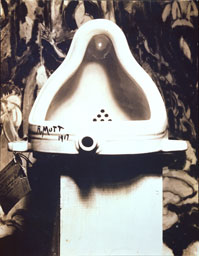
The Uncollectable Duchamp
June 22, 2010Is Marcel Duchamp one of the world’s least collectible artists? The assertion seems odd given the numinous quality that every scrap of material associated with the artist has achieved in the marketplace, but while the relic hunters are active, supply is constrained. ARTINFO puts him on the uncollectible list.
read more... -
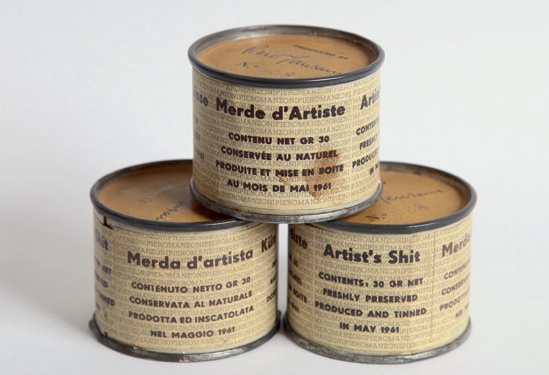
New Realisms, Readymade in Madrid
June 18, 2010An enlightening exhibit at Madrid’s Museo Reina Sofia weaves together the ruptures of postwar art to focus on the interplay between readymade and spectacle in 1957 through 1962. Duchamp’s shadow broods large over the whole, which is punctuated by the death of Jackson Pollack and the dawn of the public careers of artists like Tinguely, Oldenburg, Klein, Johns. Necessary and promethean.
(Through September)
read more... -
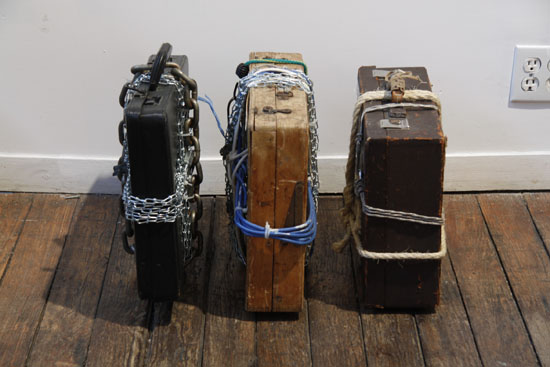
The Museum of Good Ideas
June 17, 2010Duchamp’s "underground" career — decades ostensibly away from the art world in pursuit of chess — is a touchstone for youthful artist Mark Bloch, who has taken the gameboard out of the underground and bck into the museum gallery in his recent series, Storage Museums. There’s an element of travel chess here too, not to mention the Museum in a Suitcase…
read more... -
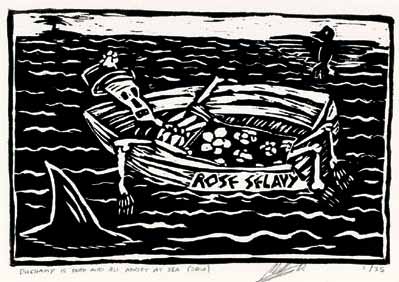
Stuckists versus the High Concept
June 15, 2010 An "ominous" picture by artist Mark D currently hanging in the British Royal Academy of Art depicts what appears to be a dessicated Marcel Duchamp adrift on a dark and desolate sea. Only carrion birds, volcanic ash and the totemic shark of the Stuckist art movement -- to which Mark D belongs -- punctuate the gloom. The shark, the Stuckists explain, refers to the career of Damien Hirst. Was Duchamp the victim of art history or its instigator? The little boat Rose Sel.. read more... -
Requiem for the Readydesigner
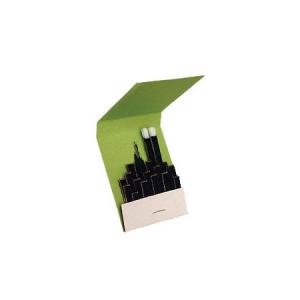
June 14, 2010Tobias Wong, often considered a successor to the ironic aspects of Marcel Duchamp’s career on the margins of art, killed himself late last month at the age of 35. He will be remembered for his "readydesigned" objects, which carry the readymade art concept into the marketplace of contemporary branded mass consumptions. A sensitive recent obituary situates Wong in an explicitly Duchampian theoretical context.
read more... -
Cage: Sound and Sculpture
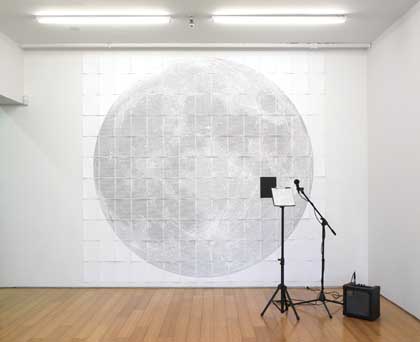
June 12, 2010The current show at BALTIC features a response from eight contemporary artists to a piece of work developed while Cage was at the New School of Social Research. And 60 years on, artists are still drawing inspiration from the avant garde composer’s life and work.(Through September 19.)
read more... -

God Save … Tu m’?
June 10, 2010Punk is theater, argues Stefany Anne Golberg, and dada was theater. How much does the iconic poster for the Sex Pistols’ "God Save the Queen" single owe to Duchamp’s pioneering use of safety pins to hold Tu m’ together? The pin pierces and intrudes on the picture plane, unifying the composition by subverting its surface integrity.
read more... -
Fountain to Fountain
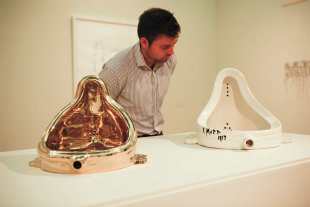
June 9, 2010London’s Whitechapel Gallery is exhibiting two versions of Duchamp’s "Fountain" — one of the porcelain replica "originals" and Sherrie Levine’s cast-in-bronze tribute — through September 5. The focus is on materials, corporeal reality, the body and its limitations.
read more... -
Remembering Duchamp’s Meal
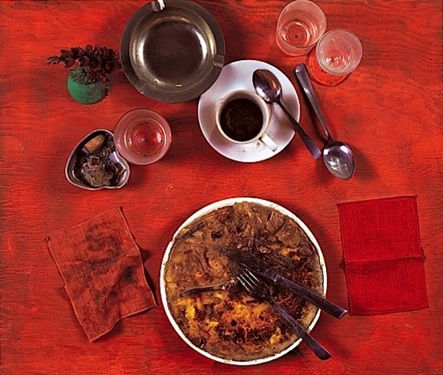
June 7, 2010Daniel Spoerri’s work with food and its remains has recently returned to the public’s attention as the now-80-year-old artist excavates a banquet he buried in 1983. The project has also reminded some critics of his noted "readymade" exhibition of the detritus of a meal served to Marcel Duchamp, with whom Spoerri associated in the 1950s.
read more...