



Duchampian News & Views
-
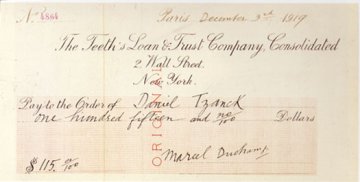
The Tzanck Check, Duchamp Bonds and Other ‘Art Currencies’
May 21, 2010The line between art and seigniorage, creation and currency fascinated Duchamp and was the focus of several minor works — notably the Monte Carlo bonds and the little-discussed Tzanck Check of 1919 — as well as major endeavors like the traveling salesman’s Box in a Valise and other readymade reproductions. A recent study of art currencies brings these marriages of concept and commerce into a larger historical context.
read more... -
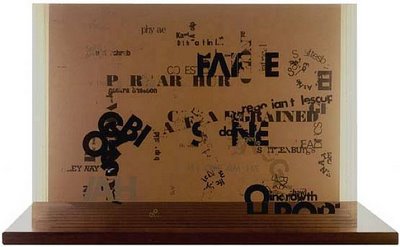
Cincinnati Retrospective Highlights Cage and Others
May 20, 2010 A major exhibition of works from the Carl Solway Gallery's 48-year collection highlights the work of conceptual artists like Buckminster Fuller, Nam June Paik and especially John Cage. Solway, now 75, befriended Cage in the late 1960s and eventually published the composer's relatively little-known modular tribute to his own influences, Not Wanting To Say Anything About Marcel Duchamp. Some unsold inventory remains, Solway says. (Through July 30 in Cincinnati.) .. read more... -
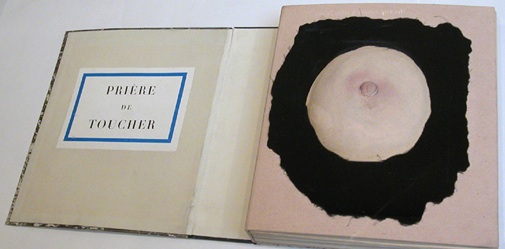
Barbican Builds a Surreal House
May 19, 2010 Duchamp's latex breast beckons visitors to the Barbican's "Surreal House" exhibition this summer. In fact, the sculpture -- originally brought to bear as the cover to the 1947 "Surrealism in 1947" show catalog -- serves as the doorbell for a haunted structure designed by London architect firm Carmody Groarke. Once inside, fans of surrealism will be able to view works by Dalí, Bourgeois, Magritte and other giants of the movement as well as films by.. read more... -
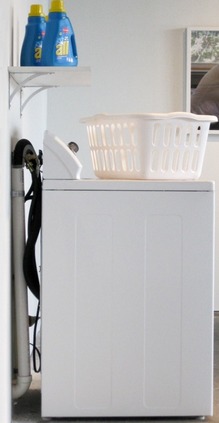
‘Readymade’ Washing Machine Offered at $5,000
May 18, 2010Miami’s Spinello Gallery recently exhibited a fully functional washing machine and attached clothes line signed by local artist Lee Materazzi and titled "Mother." Although the artist hopes its $5,000 asking price will make it accessible to casual collectors, it has as yet found no buyers despite its obvious Duchampian aura.
read more... -
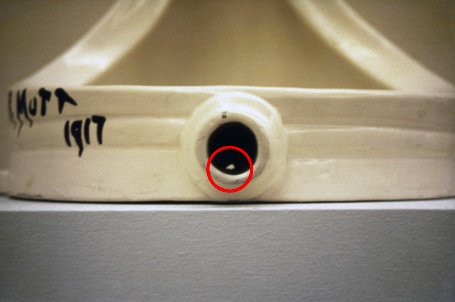
Stolen Fountain Chip on Display
May 17, 2010 A pair of Italian artists who spent two years pilfering fragments of various celebrated contemporary art objects are now exhibiting their collection of souvenirs under the heading "Stolen Pieces." Eva and Franco Mattes chipped, clipped and pried bits of works by Oldenburg, Beuys, Warhol, Koons and even Duchamp out of their museum settings and arranged them under glass. The pursuit of these trophies raises poignant questions about the curatorial impulse -- is the mu.. read more... -
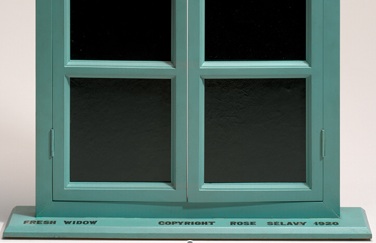
National Gallery Show Highlights Modernists
May 14, 2010An exhibition opening this weekend at the National Gallery of Art highlights the interest of Deborah and Ed Shein in American modernist art. Among the works on display are Fresh Widow, an assisted and unusually complex replica readymade originally attributed to Rose Selavy. Notably, as the NGA catalog puts it, the windows themselves have been rendered opaque if not shuttered outright.
read more... -
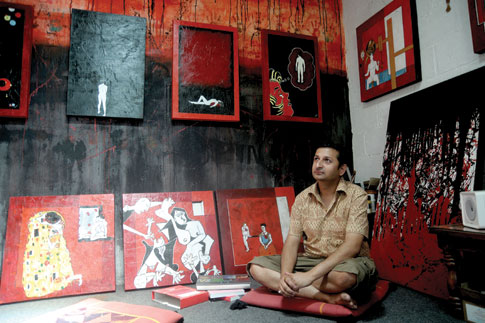
Duchamp’s Influence Reflected in Kathmandu
May 13, 2010Nepali artist Kapil Mani Dixit alludes to Duchamp among other artistic luminaries in his upcoming show in Kathmandu, "Tribute to the Great Artists." Dixit’s engagement with Picasso in particular is a constant in his work; other paintings executed in his distinctive Himalayan-influenced style nod to Frieda Kahlo, Gustav Klimt and others.
read more... -
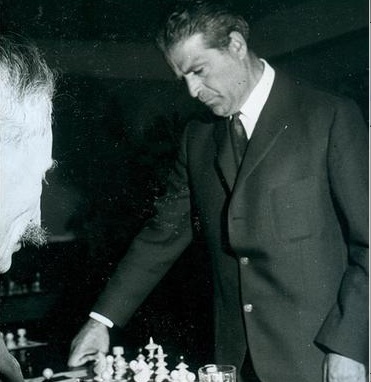
Last Original Chess Grandmaster Dies
May 12, 2010Andor Lilienthal, the last of the original 27 grandmasters honored by the World Chess Federation in 1950, has died in Budapest at age 99. He regularly competed against Marcel Duchamp in tournament contexts and considered the artist the most talented chess player to come out of France.
read more... -
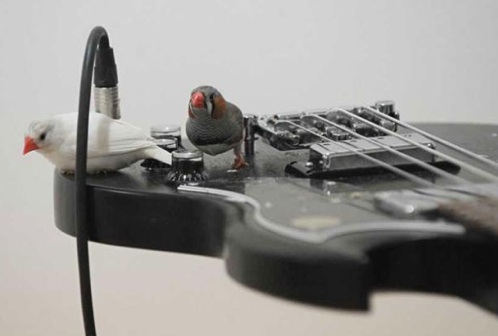
Sound and Sculpture
May 11, 2010The emergence of sound art as a critical category has sparked new interest in the "imaginary sound sculptures" of Marcel Duchamp and his disciples like John Cage. Acoustic artist Susan Philipsz is even up for the Turner Prize. But how do these abstract soundscapes differ from the conventional category of music, and how do they converge with the pure Duchampian concept?
read more...