



Duchampian News & Views
-
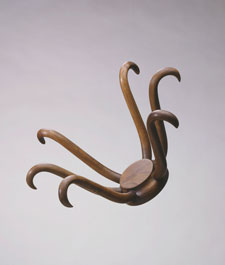
“Chance Aesthetics” to open Friday, Kemper Museum of Art
September 15, 2009 This upcoming exhibition to open Sept. 18 at Mildred Lane Kemper Museum of Art explores artists who incorporate chance as a decisive factor in the creation of an artwork. The work spans from the early 20th century and follows through to the 1970s. The exhibition includes over 60 works by Jean (Hans) Arp, George Brecht, John Cage, Marcel Duchamp, Max Ernst, Ellsworth Kelly, Alison Knowles, François Morellet, Robert Morris, Robert Motherwell, Jackson Pollock, Dieter Rot.. read more... -
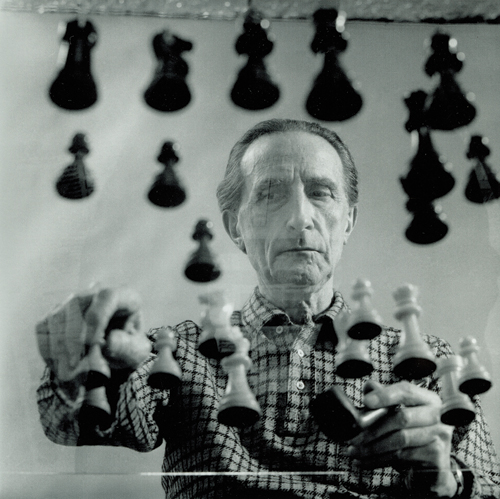
Marcel Duchamp:The Art of Chess
September 11, 2009 Marcel Duchamp: The Art of Chess opened yesterday at Francis Naumann Fine Art Gallery, it is the first exhibition to explore Duchamp's interest in chess and its effect on his artistic production. It has traveled from St. Louis University Museum of Art and includes unique additions of artists represented by Naumann. <i>Also included in the show will be works by a number of Duchamp’s contemporaries—Man Ray, Georges de Zayas, Max Ernst, Salvador Dal&iacu.. read more... -
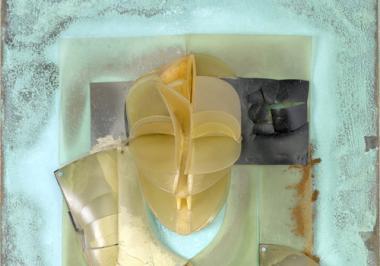
Time Will Tell, Exhibition at Yale University Art Gallery Closes
September 8, 2009 Yale University Art Gallery recently closed an exhibition offering a rare opportunity to explore the process of fine-art conservation. "Time Will Tell: Ethics and Choices in Conservation" exhibits the techniques used and dilemmas faced by conservators and their process of preserving and restoring historic works of art. The artwork ranges from ancient Roman statues to instruments to twentieth century portraiture. The collection includes a portrait of Marcel Ducha.. read more... -
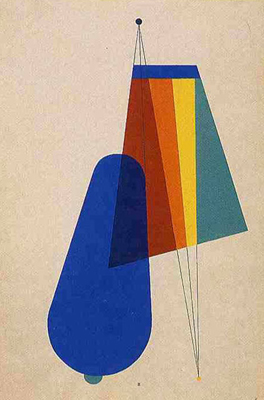
Tel Aviv Museum of Art Shows a Portfolio of 10 Pochoirs by Man Ray
September 8, 2009 Man Ray (1890 Philadelphia – 1976 Paris) created Revolving Doors between 1916 and 1917 as a series of collages made from brightly colored translucent paper, which became the major exhibit in his third one-person show at the Daniel Gallery, New York (1919). In 1926 these images were published as pochoirs (true to the original) in a portfolio, and in 1942, noticing that the early collages began to fade, Ray reproduced them in oil on canvas. These paintings appear in sever.. read more... -
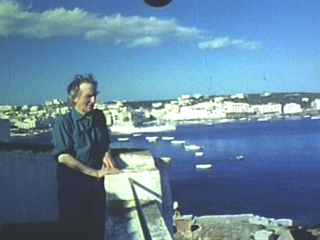
Silence Sea and Marcel Duchamp, by Julius Ziz
September 4, 2009Silence Sea and Marcel Duchamp(2000, USA/FRA 16mm, colour/b&w, 23 min.) was created from found 16mm footage of Marcel Duchamp and his wife Teeny playing a game of chess. He is pretending that he is winning but he is losing.
Follow to view excerpt or download entire film.
read more... -
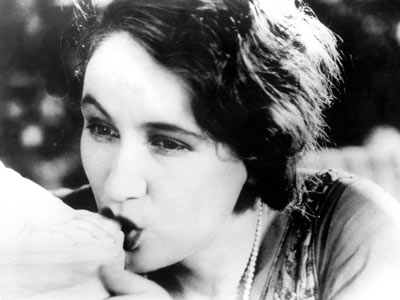
Vanderbilt’s International Lens Film Series Begins Today
September 2, 2009 Vanderbilt University’s film series, International Lens, will begin Sept. 2. This series, which is free and open to the public, will feature 29 different films from September through December. Each screening includes an introduction as well as facilitated post-screening discussion. In conjunction with "Surreal to Reel: Paris on Film" festival, International Lens will screen a 35mm print of Luis Bunuel's surrealist masterpiece L’âge d’or. Thi.. read more... -
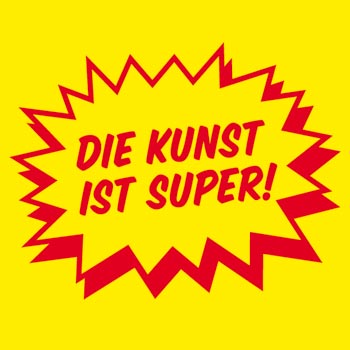
DIE KUNST IST SUPER!
September 1, 2009 Die Kunst ist super! (Art is super!) is the title under which the Nationalgalerie im Hamburger Bahnhof – Museum für Gegenwart is showing a new presentation of works from its collections. In line with the motto "Die Kunst ist super!" proclaimed by Udo Kittelmann, this presentation is one of the most important steps on the path to the future positioning of the Hamburger Bahnhof under the new director of the Nationalgalerie. Spanning some 10,000 square meter.. read more... -
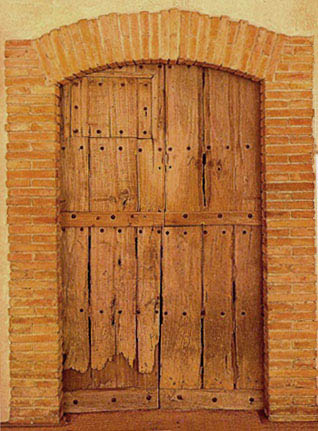
The First Annual Anne d’Harnoncourt Memorial Symposium: Scholars Present Marcel Duchamp: Etant donnes, Sept. 12
August 28, 2009 The Philadelphia Museum of Art and the History of Art Department at the University of Pennsylvania are jointly initiating this annual symposium in honor of Anne d’Harnoncourt to celebrate her contributions to art and culture in Philadelphia, the region, and beyond. Scholars Present Marcel Duchamp: Étant donnés Marcel Duchamp’s enigmatic final masterpiece Étant donnés: 1. La chute d’eau, 2. Le gaz d’éclairage (Give.. read more... -
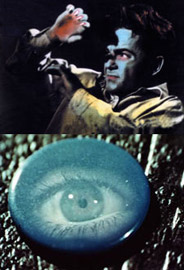
New Jersey Film Festival Fall 2009
August 27, 2009 On Sept. 4 the Rutgers Film Co-op/ New Jersey Media Arts Center will present the New Jersey Film Festival Fall 2009. The festival will showcase new international films, independent American films, experimental and short subjects, as well as "cutting edge" documentaries. It will feature over 50 screenings from September 4 to November 8. Thursday evenings will highlight experimental films including such Surrealist masterpieces as Blood of a Poet (Le Sang D'Un Poet) b.. read more...