



Duchampian News & Views
-
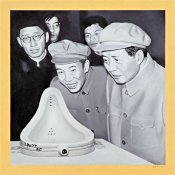
Where Next for Mao? Shi Xinning’s Director’s Notes on Chinese History
January 7, 2009 “I almost always work with a staging of completely incompatible props and scenery. For example, Mao views a Duchamp exhibition in China – something that never took place. Or I place a curved steel sculpture by Richard Serra in Tiananmen Square – facing Mao’s famous portrait at the entrance to the Forbidden City. Or I arrange a meeting between a Mao statue and New York’s Statue of Liberty. […] I am not interested in Mao Tse-tung as a real p.. read more... -
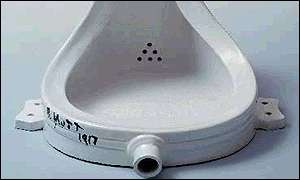
Auction of Duchamp’s Readymades
January 7, 2009 In May 2002, according to the BBC News article Urinal Fails to Make a Splash, a company in New York held an auction of "a rare collection of Marcel Duchamp's famous 'readymade' conceptual art". The work " sold for prices below expectations" and some of the items did not sell at all. The most famous of the works sold at the auction was Fountain, which "sold for $1,185,000...short of its low estimate of $1.5m". For fans of Duchamp.. read more... -
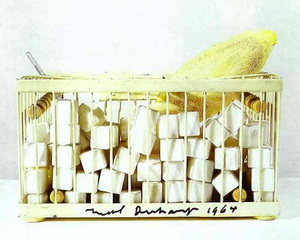
Excerpt from Marcel Duchamp: Art as Anti-Art
January 7, 2009 "Why Not Sneeze? was not a success. Not many people saw it, and those who did found it hard to understand, but too strange to be meaningless. It was the kind of transitional object that channeled the hot air of Dada into the lungs of Surrealism, which was at that time just evolving. Later in 1936, Why Not Sneeze? was even included in a Surrealist exhibition in Paris. It was placed in a showca.. read more... -
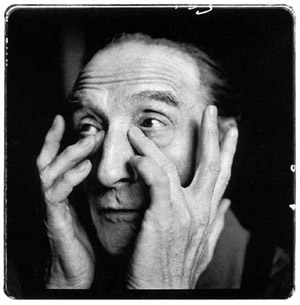
Marcel Duchamp
January 5, 2009 "Henri-Robert-Marcel Duchamp was born in Blainville-Crevon, a Normandy village, as the son of Eugène Duchamp, a notary, and Marie-Caroline-Lucie Duchamp (née Nicolle). Marcel was the fourth of seven children. Four of them gained fame as artists. Raymond Duchamp-Villon (1876-1918) became a sculptor and Jacques Villon (1875-1963) and Suzanne Duchamp (1889-1963) became painters. Duchamp himself started to paint in his teens. Duchamp's artistic aspirations were.. read more... -
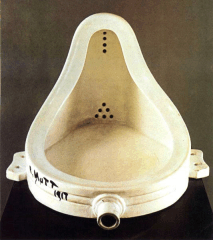
WEIRD WEDNESDAY: Art Museum Toilets Elevated to an Art Form
January 5, 2009“’This museum was founded in the spirit of Marcel Duchamp, who in 1917 produced the sculpture Fountain and changed the way we viewed art,’ stated Director Robert Schlemielle. ‘This piece essentially showcased that art may not be hanging in the proud walls of a museum gallery, but in the common objects and in even in the restroom. So today we launch this website asking some of the same questions about the current art establishment and its high brow art.’”
read more... -
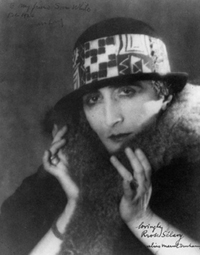
Rose Selavy
January 3, 2009 Marcel Duchamp, Man Ray, and Francis Picabia all created female alter-egos at some point during their careers. In her article Marcel Duchamp and Man Ray: Dada in drag Joanna Pitman argues that all three of these alter-egos "related to their broadening concept of what it meant to be an artist', but Duchamp's was the most complex. Unlike Man Ray and Picabia, Duchamp created artworks, such as Why Not Sneeze Rose Selavy? (1921) and Fresh Widow (1920), under.. read more... -
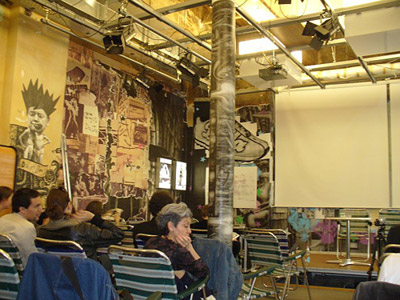
Burghers of Zurich vote to support Dada birthplace
January 2, 2009"Voters in Switzerland’s business capital Zurich decided on Sunday to continue subsidizing the Cabaret Voltaire, the birthplace of the anarchic Dada movement."
read more... -
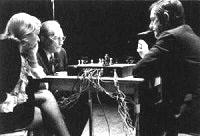
The Music of Marcel Duchamp
January 1, 2009 "Although Marcel Duchamp's musical oeuvre is sparse, these pieces represent a radical departure from anything done up until that time. Duchamp anticipated with his music something that then became apparent in the visual arts, especially in the Dada Movement: the arts are here for all to create, not just for skilled professionals. Duchamp's lack of musical training could have only enhanced his exploration in compositions. His pieces are completely independent of the preva.. read more... -
Work avoidance:
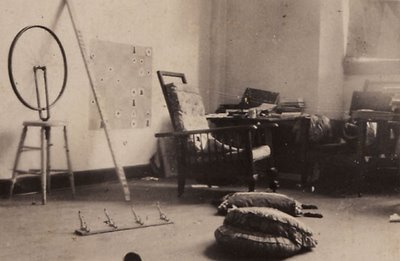
December 31, 2008 "[Duchamp's readymades] are objects for cleaning, hanging, storing, drying, preening, and peeing: objects whose purpose is to aid in self-presentation, objects that allow homes and offices to function. They are the unsung aids that allow us to do the work of maintaining house and body, so that we are better prepared to do our other work, like making art, for instance. But this was not the situation of these objects in Duchamp's studio: the hat rack was suspended from the.. read more...
the everyday life of Marcel Duchamp’s readymades