



Duchampian News & Views
-

An Interesting Critique of John Cage
July 17, 2011 "Music is sound. Some sounds may be music. Silence is the medium in which sounds and music are expressed. Spare me the next crackpot offering of themes and variations on silence. The deaf have ways of understanding sound and appreciating music. Tell me how you would convey the artisitic merit of silence to the deaf??" -Justinae, reader/contributor to the London Telegraph. How indeed could the deaf be made to appreciate "4'33?" A new problem for Cage .. read more... -
Arthur C. Danto: on Hegel and Duchamp
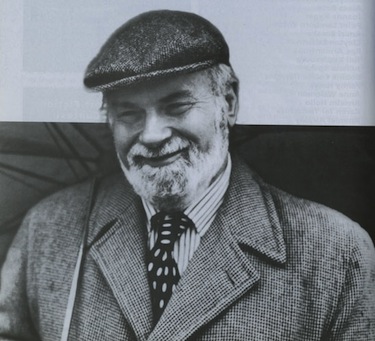
July 14, 2011 Arthur C. Danto's conceptions of "the end of art" and "posthistoricism" were quickly adopted as catch-phrases and widely misunderstood by the art world of the eighties and nineties. He did not mean, however, that art could no longer be made, accomplished, nor that any criteria for its judgment was to be doomed--deemed historical. Here, Danto illuminates his complex philosophy--of which art was always and ever the object: "...and it is the.. read more... -
Duchamp’s Funeral
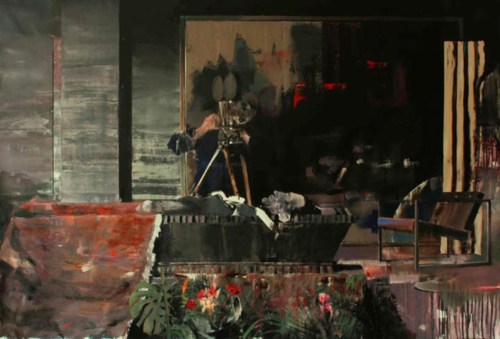
July 13, 2011Duchamp’s Funeral:
posted by darksilenceinsuburbia.
liked by structuredstructure.
really liked by hyperbolicdude
reblogged by yourlaughlinesareshowing.
reliked by themasquerademind
reposted by newjerseykeepmybones
brought to you by the contemporary art blog.
rebrought to you by marcelduchamp.net
readymade for you by marcel duchamp.
read more... -
Few Have Explored This Bewildering Territory
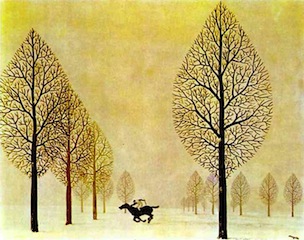
July 12, 2011 "The privileged realm located in the boundary-zone between the three fields of power, religion and semiotics...Few people have explored this bewildering territory (by definition a no-man’s land of imagination) with the same energy as René Magritte, the bourgeois surrealist dressed in business suit and bowler hat, the revolutionary explorer who wove together into one strand the activities of showing and saying, geometry and linguistics, painter and poet. In th.. read more... -
For The Reading List: Man Ray's Montparnasse
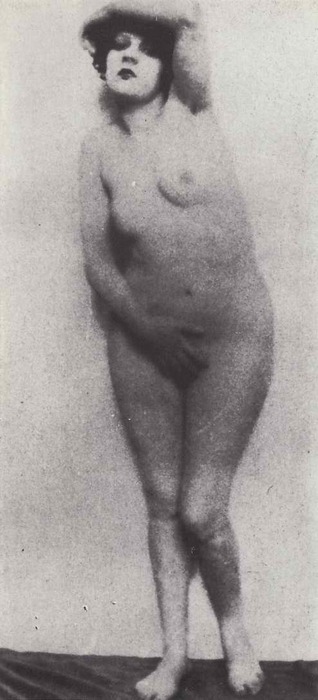
July 11, 2011 It’s no easy task for a work of history to dish all the gossip you want hear and still manage to seem culturally and sociopolitically substantial. Man Ray’s Montparnasse, by Herbert Lottman (2001) does just this. Suitable for the beach or the classroom, it manages to maintain the pace of a tight page-turner while encompassing the major personages, relationships, movements and trysts at the center of Paris’s interwar bohemia...rendering them as they mig.. read more... -
Oops, They Did It Again
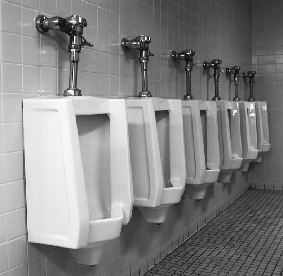
July 9, 2011 During the last hundred years or so there have been numerous attempts, successful and unsuccessful, by pranksters and artists alike, to leave their mark—in other words, urinate—on Duchamp’s upturned Fountain. On the 17th of this month, the latest attempt aired on a Youtube channel. Two artists, positioned across from one another with the Fountain between them as though in competition, relieved themselves over Duchamp’s piece at the Tate mus.. read more... -
Parisian Gallery Focuses on Multiples and Editions in New Show
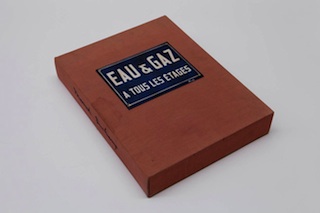
July 9, 2011 Perrotin, a gallery on Rue Turenne, in Paris that represents Tatiana Trouve and Matthew Day Jackson among other top contemporary artists, is currently hosting a exhibition entitled "Marcel Duchamp, Joseph Beuys, and Takashi Murakami: A History of Editions." By way of inciting general reflection on the issue of multiples and "mass-produced" sets in "fine" art (which really achieved widespread legitimacy only with the arrival of Warhol and Lichtens.. read more... -

Aren’t You Bored By Duchamp’s Legacy?
July 8, 2011 “Aren’t you concerned that the dialectical equation of art and anti-art might have congealed into a perverse tautology, now that even the middle class collects its products? Aren’t you bored by the phoniness of a good part of Duchamp’s legacy? Don’t you feel the powerlessness of avant-garde art to elicit indignation from a society that is too liberal but still not free enough, too eager to mask its conflict behind pluralism and too anxious to clo.. read more... -
Beyond Nude Chess: Eve Babitz Embodied Bygone L.A.
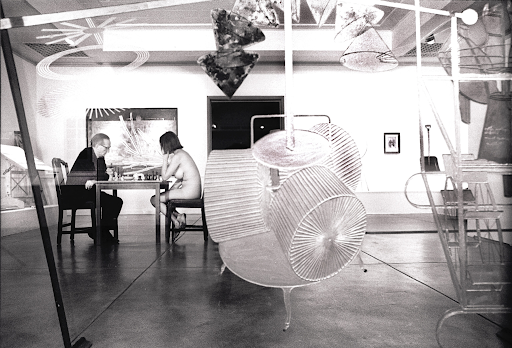
July 7, 2011 The photograph of Marcel Duchamp playing chess with a nude Eve Babitz has become one of most iconic images of the French artist. In a gallery filled with his works, a well-dressed, gentle-looking Marcel sits opposite a young, voluptuous woman. Her face retreats behind her bangs but her posture is composed and comfortable, and Duchamp himself does not seem to care that his opponent has no clothes on. Behind them is “The Large Glass," or “The Bride Stripp.. read more...