



Duchampian News & Views
-
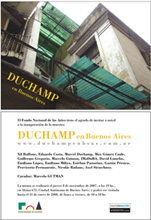
Duchamp in Buenos Aries : Exhibition
September 11, 2008“De la estadía porteña de nueve meses de Marcel Duchamp es relativamente poco lo que se sabe y gracias a la creación de unas pocas obras y a una decena de cartas.”
read more... -
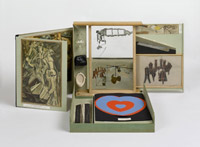
Marcel Duchamp: A work that is not a work “of art”
September 11, 2008 MAM – MUSEU DE ARTE MODERNA DE SÃO PAULO Curator: Elena Filipovic 15 July - 21 September "On the day marking its 60th birthday, July 15 (Tuesday), the Modern Art Museum of São Paulo presents Marcel Duchamp: A work that is not a work 'of art '. The exhibition takes its title from a questi.. read more... -
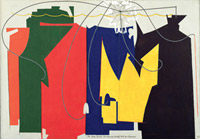
Picabia, Man Ray, Duchamp, des hEROS
September 11, 2008"Review: Duchamp, Man Ray, Picabia was on view at the Tate Modern, London in May. It traveled to the Museu Nacional d’Art de Catalunya, Barcelona, where is on view from June 19 to September 21."
read more... -
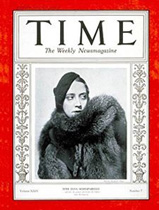
Elsa Schiaparelli, Surrealist Star
September 11, 2008“Elsa Schiaparelli was an influential Italian fashion designer. Along with Coco Chanel, she dominated fashion between the two World Wars. Starting with knitwear, her designs were heavily influenced by Surrealists like her collaborator Salvador Dali…Elsa began working for Gaby [Picabia, ex-wife of French Dadaist artist Francis Picabia] who introduced her to artists such as Marcel Duchamp and Man Ray.”
read more... -
Machinima and Up and Coming
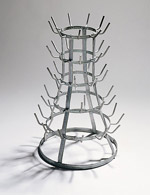
September 11, 2008“Most of my reading and writing right now is concerned with how Surrealists theorized found objects. The principal figures I’m looking at, Joseph Cornell and Marcel Duchamp were not officially inaugurated by Andre Breton into the Surrealist group but made some of the most interesting contributions to found object art with their assemblages and readymades.”
read more... -
“ALL ARTISTS ARE NOT CHESS PLAYERS” : Allan Savage on Duchamp, Man Ray, Picabia
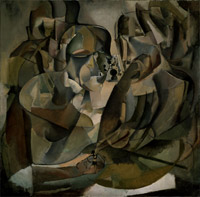
September 11, 2008“For Marcel Duchamp, chess was almost everything. As his friend, the author Henri-Pierre Roché, noted: “He needed a good chess game like a baby needs his bottle.” It featured throughout his art career, from his early painting Portrait of Chess Players (1911) to Reunion, the performance/chess game he staged with John Cage in 1968 on an electronically prepared board.”
read more... -
Jeu d’échecs avec Marcel Duchamp
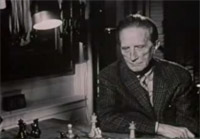
September 11, 2008“This film records an in-depth interview with Duchamp which took place five years before his death, at the time of his first ever one-man show (at the Pasadena Art Museum). It records for posterity Duchamp talking about his life, his ideas on art, why he chose to continue living in America after fleeing France in 1915, and why he virtually abandoned his work as an artist in 1923.”
read more... -
Machinima and Up and Coming
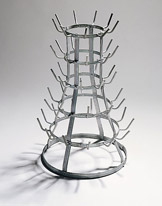
September 11, 2008“Most of my reading and writing right now is concerned with how Surrealists theorized found objects. The principal figures I’m looking at, Joseph Cornell and Marcel Duchamp were not officially inaugurated by Andre Breton into the Surrealist group but made some of the most interesting contributions to found object art with their assemblages and readymades.”
read more... -
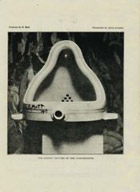
Davy between painting, photography
September 11, 2008“In his letter to Alfred Steiglitz — the father of American photography — Marcel Duchamp wrote: “You know exactly how I feel about photography. I would like to see it make people despise painting until something else will make photography unbearable.” The letter is dated May 22, 1922.”
read more...