



Duchampian News & Views
-
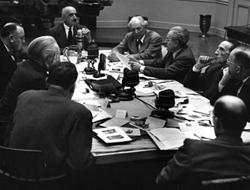
The Western Round Table on Modern Art (1949)
September 10, 2008“Participants included Marcel Duchamp, Frank Lloyd Wright, Arnold Schoenburg, Mark Tobey, Gregory Bateson. Organizer Douglas MacAgy writes, “The object of the Round Table was to bring a representation of the best informed opinion of the time to bear on questions about art today (1949).”…
read more... -
Scathing Online Schoolmarm
September 10, 2008 Margaret Solton's response to Yale erred in banning Shvarts' art by Seth Kim-Cohen"An art professor at Yale wrestles with the Aliza Shvarts controversy. He attempts to open with humor, but what he’s written sounds pompous and illogical. Do Yale students think professors are gods? Robots? All teachers have always been people. Why is this a compromised position? Is he saying that as a person I find students who film themselves bleeding out repeated induced abortions in bathtu.. read more... -
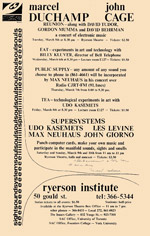
That Ubu that you do
September 10, 2008“(Alfred) Jarry’s legacy was formalised posthumously in 1948 by the founding of the Collège de ‘Pataphysique in Paris. Its constitution asserts that all people are ‘pataphysicians whether they know it or not, but paid-up Collège members have included artists… Marcel Duchamp, Max Ernst, Jean Dubuffet… And its precepts have produced music more interesting and challenging than Maxwell’s Silver Hammer.
read more... -
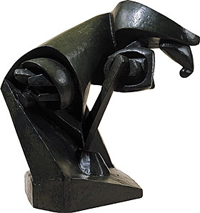
Duchamp’s Brother Raymond Duchamp-Villon sculpture
September 10, 2008“Raymond Duchamp-Villon’s began work on the plaster original of The Horse, a composite image of an animal and machine, in 1914, finishing it on leaves from military duty in the fall. It was preceded by numerous sketches and by several other versions initiated in 1913. The original conception did not include the machine and was relatively naturalistic, as is evident in the early states of the small Horse and Rider of 1914. “…
read more... -
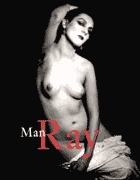
…Ray, man! Man Ray Exhibition in Madrid
September 10, 2008 " "My mother told me I made my first man on paper when I was three", Man Ray wrote in his Self-portrait typed manuscript. "Man Ray - Unconcerned But Not Indifferent" exhibition presents drawings, photographs, paintings, sculptures, personal objects, and images from the Man Ray Trust collection founded by the artist's wife, Juliet Browner in Long Island, New York. The exhibition at the Colecciones.. read more... -
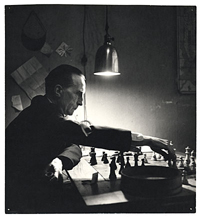
Chess musings by circletide on Dichterische Fragmente
September 10, 2008"It was Duchamp, wasn’t it, that gave up his art, his projects, for chess? Perhaps not true, but I remember it so. Did Duchamp not talk of chess being the highest form of art because it is – in the most basic form – a visual representation of human thought, but also because it, as does life, contains rules, symbolism, sign structures, competitiveness, relationship…? Is it not also true that it cannot be commercialised like art?" …
read more... -
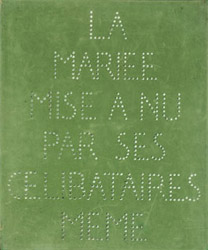
In the Tate Collection : Marcel Duchamp:
September 10, 2008
The Bride Stripped Bare by her Bachelors Even, (The Green Box) 1934 [front cover]"In 1934 Marcel Duchamp – or more accurately his alter ego Rrose Sélavy – published in green felt covered boxes ninety-four loose notes relating to the development and function of his magnum opus The Bride Stripped Bare by her Bachelors Even, known familiarly as ‘The Large Glass’…
read more... -
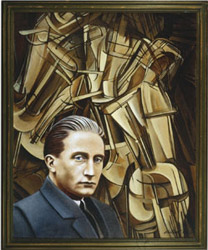
Todays Quote 04.18.08 by michael ammerman
September 10, 2008"Art is like a shipwreck… it’s everyman for himself." Marcel Duchamp…
read more... -
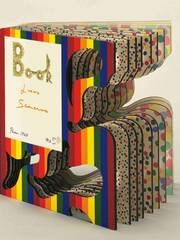
MoMA Exhibits Book/Shelf
September 10, 2008 March 26-July 7, 2008 "Book/Shelf begins with Marcel Duchamp's Unhappy Readymade (1919), a work created when the artist, while traveling, instructed his sister back home to hang a geometry book on her balcony and to let the wind flip and tear the pages. The artist explained, "The wind had to go through the book, choose its own problems, turn and tear out the pages." The piece-destroyed in the process of its .. read more...