



Duchampian News & Views
-
Duchamp’s Persona
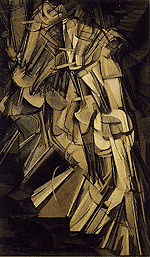
December 30, 2008 In her article Duchamp's Hidden Noise: A Lifelong Flirtation With Fame, Alice Goldfarb Marquis considers Duchamp's relationship to the media and the persona which he created for himself through interviews. Marquis asserts that "Duchamp worked harder at burnishing his persona than he ever did at creating art" and that he "established his image as art's bad boy" through his witty, "bizarre", and often contradictory statements to t.. read more... -
Marcel Duchmap/ Readymades
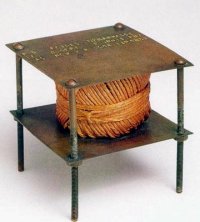
December 30, 2008"The strange thing about ready-mades is that I’ve never been able to come up with a definition or an explanation that fully satisfies me." [Marcel Duchamp] …Commentators have tried, but in vain. The elements have been covered by a scientific straight jacket whose thickness is even more surprising since the accounts from that era are rare and ambiguous."
read more... -
Some Experimental Piffles of the Silent Era
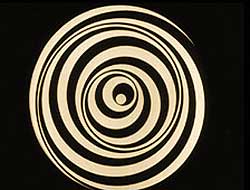
December 30, 2008The author reviews some experimental silent films, including Duchamp’s Anemic Cinema and Man Ray’s Le Retour a la Raison, and concludes that they are "piffles", interesting only within the larger context of the artists’ works.
read more... -
A Short Biography of the
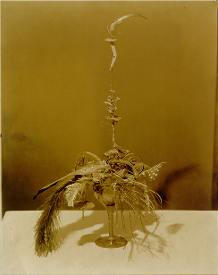
December 29, 2008 "The Baroness Else von Freytag-Loringhoven (sometimes printed with another 'von' after 'Freytag') was one of the most bizarre characters seen in Greenwich Village during the '20s. In many ways the Baroness's life was so tragic and ridiculous that it is difficult to understand what interest Pound took in her. Until recently, very little was known of her day-to-day life. Since the publication of her autobiography by Paul Hjartarson and Douglas O. Spettigue in 1992, much mo.. read more...
Baroness Elsa Freytag-Loringhoven
including some of her writings -
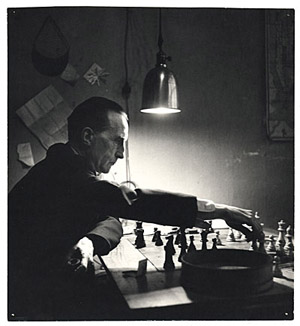
Marcel Duchamp: A Game of Chess
December 29, 2008 "This film records an in-depth interview with Duchamp which took place five years before his death, at the time of his first ever one-man show (at the Pasadena Art Museum). It records for posterity Duchamp talking about his life, his ideas on art, why he chose to continue living in America after fleeing France in 1915, and why he virtually abandoned his work as an artist in 1923. An engaging dialogue takes place between Duchamp and film-maker Jean-Marie Drot as they go a.. read more... -

Fountain Named Most Influential Modern Art Work of All Time
December 24, 2008 In 2004, Duchamp’s Fountain was named the most influential art modern art work of all time by a poll of 500 art experts. Following the announcement, an article on the BBC News website asked readers, “Do you think the Fountain is an influential work of modern art? Do you agree with the experts? Which piece would you have voted for?” The varied responses to this show that the questions Duchamp raised about the nature of art are still very much alive today. Alt.. read more... -
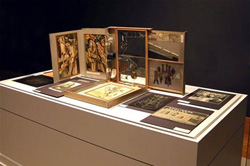
Speed Art Museum Presents Marcel Duchamp
December 24, 2008 "Louisville, Kentucky - The Speed Art Museum is excited to present to Louisville an exhibition of Marcel Duchamp: Marcel, Marcel. On exhibition 13 November through 17 February, 2008.Perhaps no artist of the twentieth century has aroused more passion and controversy, nor exerted a greater influence on art than Marcel Duchamp. Born 1887 in Blainville, France, Duchamp came to the public’s attention with his painting Nude Descending a Staircase No.2, which caused a fur.. read more... -

Changing Art Forever: Marcel Duchamp
December 23, 2008 "Four readers requested a post on Marcel Duchamp, one of the most controversial and most discussed artists in recent history. A Google search yields almost 1.5 million results for the French and American artist, whose 121st birthday was yesterday. Much of the controversy and discussion revolves around Duchamp’s “readymades,” particularly “Fountain” (1917), but, as evidenced by the four works of art above.. read more... -
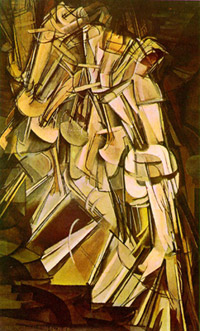
Duchamp and his legacy
December 22, 2008"What accounts for the immense intellectual prestige which the mystique of Marcel Duchamp has enjoyed in this country – if only in certain circles, to be sure – for more decades than most of us can now remember?"
read more...