



Duchampian News & Views
-
Myriad exhibits of conceptualism :
December 15, 2008
Is it art? Nuit Blanche brings question to the fore"If Conceptual Art was about de-emphasizing the art object, it’s easy to trace that notion to a much earlier time. To 1917, in fact, when Marcel Duchamp famously exhibited a porcelain urinal and signed it ‘R. Mutt.’ It was a sudden reduction of the idea of art. Duchamp was saying for the first time, with a shocking visual pun, that, with the force of idea behind it, anything could be art."
read more... -
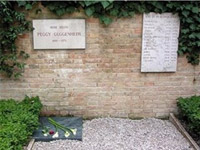
Peggy Guggenheim & Gallery Jeune
November 25, 2008 "Peggy Guggenheim opened the gallery Guggenheim Jeune in London in January 1938 ... The gallery on 30 Cork Street, next to Roland Penrose's and E. L. T. Mesens' show-case for the Surrealist movement, the London Gallery...Marcel Duchamp, whom she had known since the early 1920s, when she lived in Paris with her first husband Laurence Vail, was taken on to introduce Peggy Guggenheim to the art world; it was through him that she met many artists during her frequent visits t.. read more... -
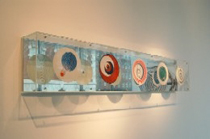
#13 VERTIGO : Marcel Duchamp and Mark Titchner
October 9, 2008" Featuring Marcel Duchamp’s Rotoreliefs and Mark Titchner’s Ur Text…
Years later I first came across Marcel Duchamp’s Rotoreliefs and of
read more...
course the connection was made. This was the progenitor of my beloved
gyrating friend whose commercial failure at alley F, Stand 147 of the
1935, 33rd Concours Lepine, had at least been slightly alleviated by
the mass-market familiarity of the Vertigo design." -
DADA part two: Marcel Duchamp
October 8, 2008 "Everyone who hates art, or what art has come to symbolize in 'modern society' today and in history can look to Marcel Duchamp. This of course, is a contradictory statement that Duchamp would not approve of. His questions and art-from his submission of a bicycle wheel as an art piece (which is currently at the MOMA in New York), to his Mona Lisa with a moustache, and the cubist, 'Nude Descending a Staircase,' Duchamp's works are varied, layered, complicated, touching yet.. read more... -
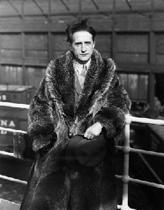
Art appreciator
October 7, 2008“Since the days of Duchamp and warhol, art can be understood in two ways: Art is a way of doing things, art is a way of seeing things.”
read more... -
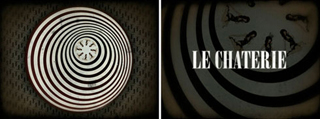
Marcel Duchamp Video Tribute– Le Chaterie
October 6, 2008 I have created a short video for the Vector Defenders (Vector Defenders) project, by OnClick studio (OnClick). It is a tribute to the Dada artist Marcel Duchamp's visual experiments, and music has been taken from the album Bailes Vespertinos. To be seen in Motion section at iikki.com.. read more... -
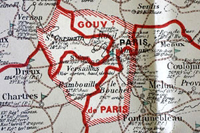
Military Avoidance: Marcel Duchamp and the ‘Jura-Paris Road’
October 3, 2008 "In 1905, the year of this War Office Report on French military resources, Marcel Duchamp was drawn into the 'net' of military conscription that was intended to incorporate every able-bodied twenty-one year old Frenchman into the national effort. Duchamp complied somewhat unwillingly but nevertheless managed to reduce his period of service ".. read more... -
“Symbiotaxiplasm” = Duchamp’s “infra-thin” ?
October 2, 2008“Symbiotaxiplasm is a term conceived by the social science philosopher Arthur Bentley (a contemporary of John Dewey, see Art As Experience) that describes an action of interconnectedness…Perhaps this is something similar to what Marcel Duchamp meant by the infrathin¡©a poetic term describing the infinitely small difference between two things.”
read more... -
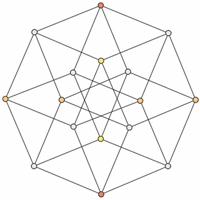
Duchamp said…
October 1, 2008“.. ‘ since a three-dimensional object casts a two-dimensional shadow, we should be able to imagine the unknown four-dimensional object whose shadow we are. I for my part am fascinated by the search for a one-dimensional object that casts no shadow at all.’ by Octavio Paz”
read more...